AR FILTER
Context & Goals
Reimagining a flagship experience
Reimagining a flagship experience
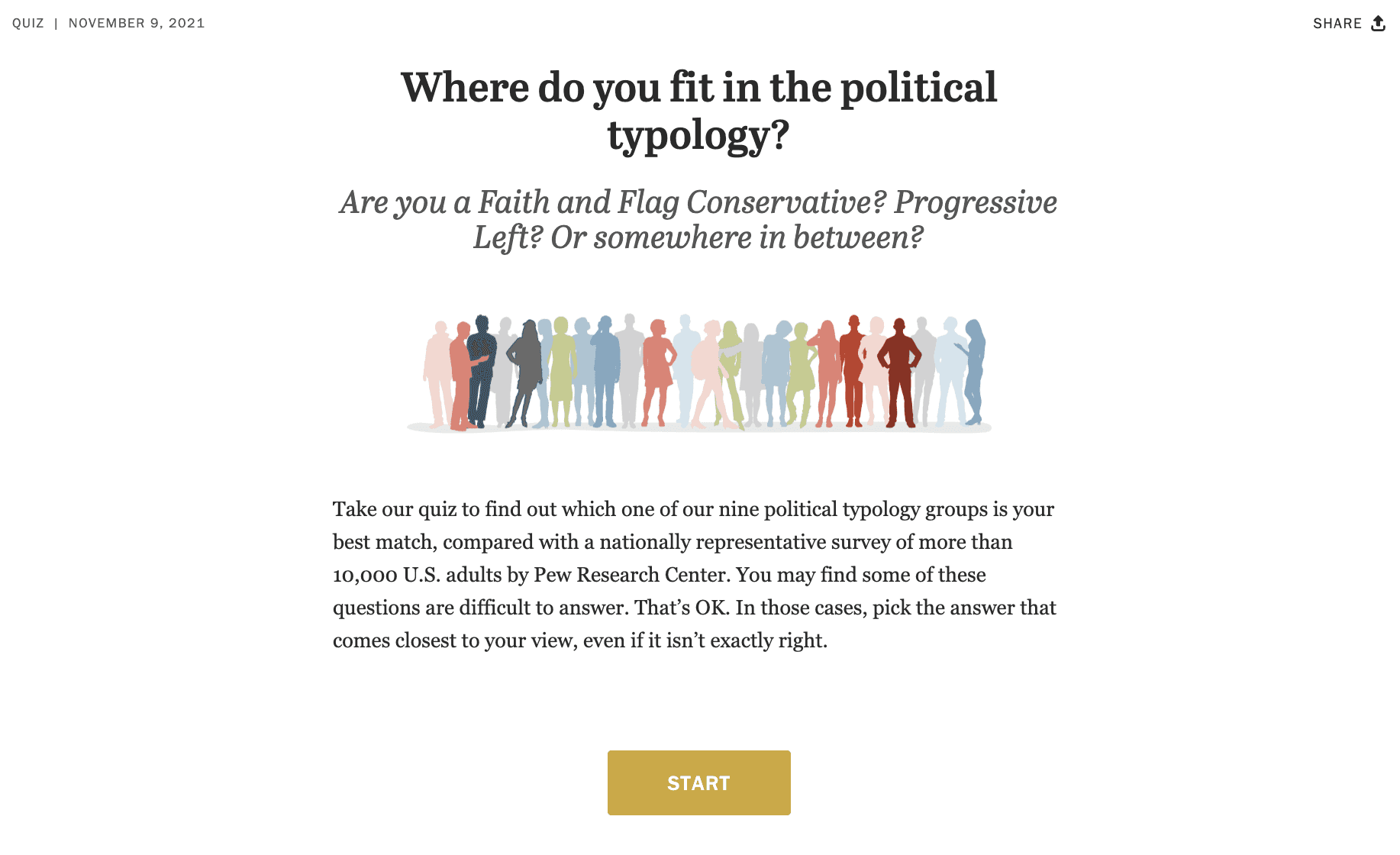
One of Pew’s most visited digital touch points is the Political Typology Quiz, a tool that helps people see where they fall on the political spectrum. While the quiz has long been a staple on our website, it was designed for a desktop audience and hadn’t evolved alongside new modes of engagement.
One of Pew’s most visited digital touch points is the Political Typology Quiz, a tool that helps people see where they fall on the political spectrum. While the quiz has long been a staple on our website, it was designed for a desktop audience and hadn’t evolved alongside new modes of engagement.
Meeting audiences where they are
Meeting audiences where they are
We designed this experience for Pew’s growing social media audience on Instagram and Facebook. These are individuals — both followers and passive scrollers — who may never visit our website but actively consume content on their feeds. Our own data shows that young adults increasingly turn to social platforms for news and information. By building this filter in Meta Spark, we tapped directly into those behaviors and created a path for discovery that felt native to their daily routines.
We designed this experience for Pew’s growing social media audience on Instagram and Facebook. These are individuals — both followers and passive scrollers — who may never visit our website but actively consume content on their feeds. Our own data shows that young adults increasingly turn to social platforms for news and information. By building this filter in Meta Spark, we tapped directly into those behaviors and created a path for discovery that felt native to their daily routines.
My role and collaboration
My role and collaboration
I co-led the design of the user journey, ensuring the experience felt intuitive and rewarding enough to retain people through completion. Early in the process, I partnered with our Lead Engineer to prototype interactions, test different flows, and explore how motion could enhance engagement. I designed the interactive progress bar, which embeds the user into the game in hopes of keeping them engaged. Once we had a strong foundation, we worked with a designer to create icons and graphics.
I co-led the design of the user journey, ensuring the experience felt intuitive and rewarding enough to retain people through completion. Early in the process, I partnered with our Lead Engineer to prototype interactions, test different flows, and explore how motion could enhance engagement. I designed the interactive progress bar, which embeds the user into the game in hopes of keeping them engaged. Once we had a strong foundation, we worked with a designer to create icons and graphics.
Pain PointS
Where we started
Where we started
Audience shift: Our younger audiences are engaging on Instagram, not Pew’s website — meaning our most popular quiz will not reach them moving forward.
Format friction: The Political Typology quiz was built for desktop, long-form, and text-heavy — the opposite of how people interact on social. It was also 18 questions. We had to figure out how to retain users over time.
Data alignment: The quiz was based on 2021 findings, so we worked closely with the research team to ensure the experience remained accurate and relevant in 2024.
New territory: This was Pew’s first AR experiment, requiring us to define creative standards, workflows, and success metrics from scratch.
Audience shift: Our younger audiences are engaging on Instagram, not Pew’s website — meaning our most popular quiz will not reach them moving forward.
Format friction: The Political Typology quiz was built for desktop, long-form, and text-heavy — the opposite of how people interact on social. It was also 18 questions. We had to figure out how to retain users over time.
Data alignment: The quiz was based on 2021 findings, so we worked closely with the research team to ensure the experience remained accurate and relevant in 2024.
New territory: This was Pew’s first AR experiment, requiring us to define creative standards, workflows, and success metrics from scratch.
Building an AR experience from the
ground up
Building an AR experience from the ground up
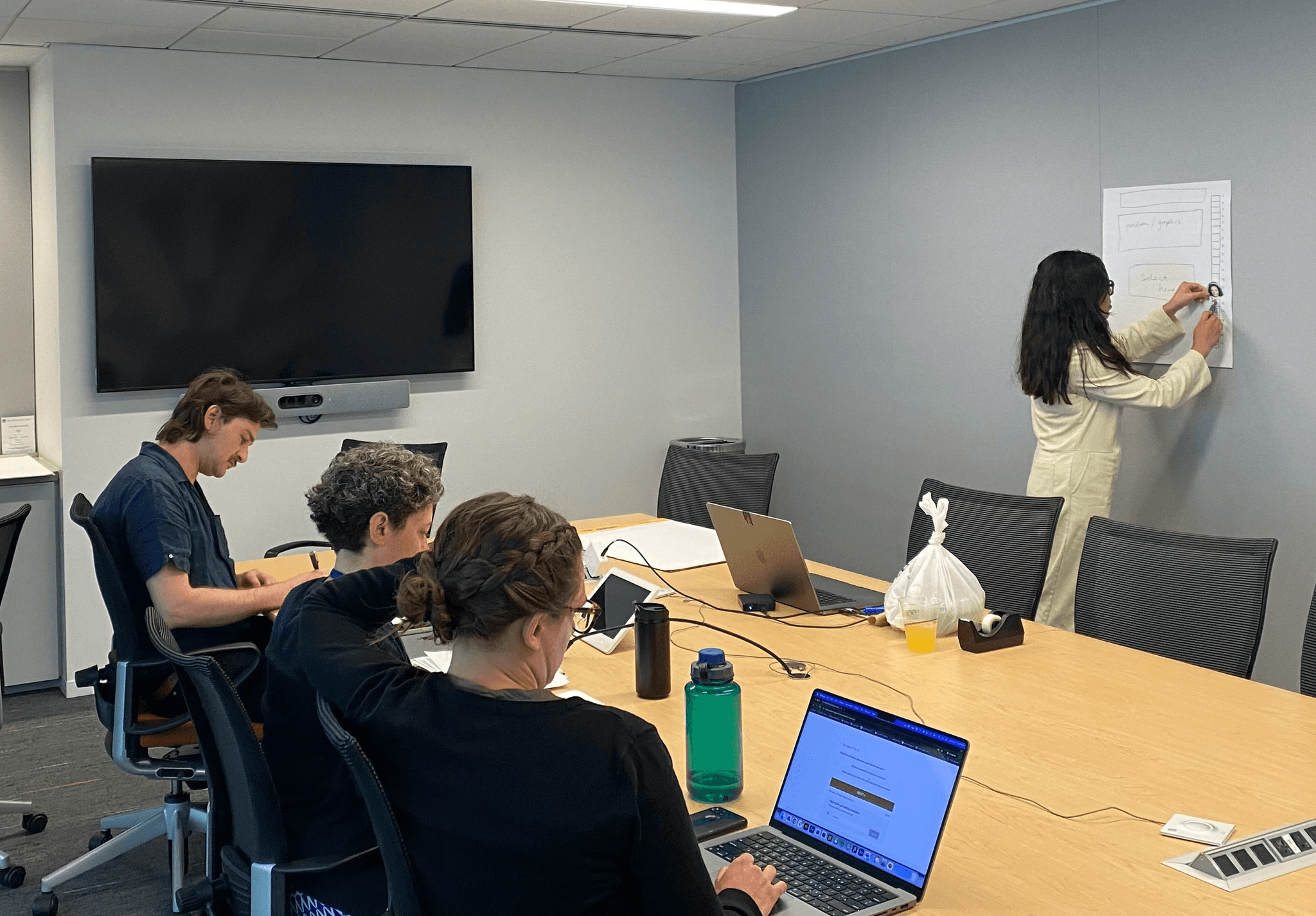
We began as a team of two — just an engineer and myself — working with paper prototypes to define how a complex political quiz could unfold inside a playful AR environment. I shaped the user journey, introducing the idea of a progress bar anchored by the user’s floating head. This became a core visual device that kept the experience feeling light, continuous, and distinctly social-native.
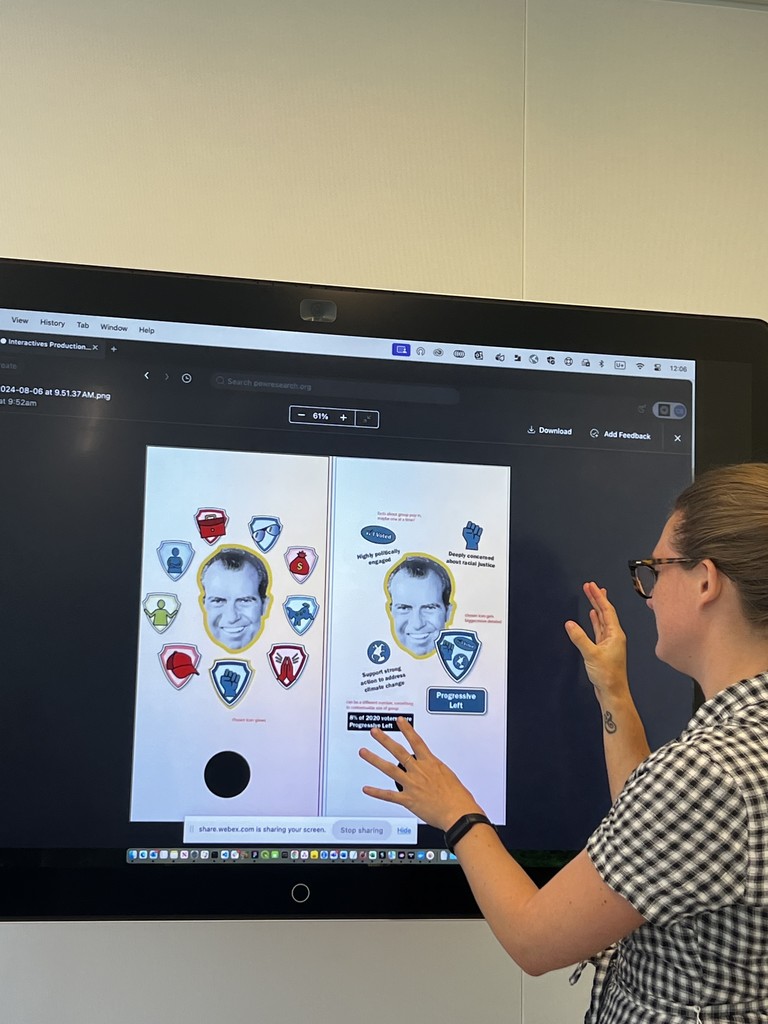
As the team expanded, our focus shifted to balancing research accuracy with platform constraints. I partnered closely with our researchers to simplify question wording and restructure the flow, bringing the quiz from eight minutes down to five without losing nuance. At the same time, I worked with our designer to establish the visual system — badges for each persona, illustrations for all 18 questions, and a color palette that communicated energy and clarity.
We began as a team of two — just an engineer and myself — working with paper prototypes to define how a complex political quiz could unfold inside a playful AR environment. I shaped the user journey, introducing the idea of a progress bar anchored by the user’s floating head. This became a core visual device that kept the experience feeling light, continuous, and distinctly social-native.
As the team expanded, our focus shifted to balancing research accuracy with platform constraints. I partnered closely with our researchers to simplify question wording and restructure the flow, bringing the quiz from eight minutes down to five without losing nuance. At the same time, I worked with our designer to establish the visual system — badges for each persona, illustrations for all 18 questions, and a color palette that communicated energy and clarity.
Process
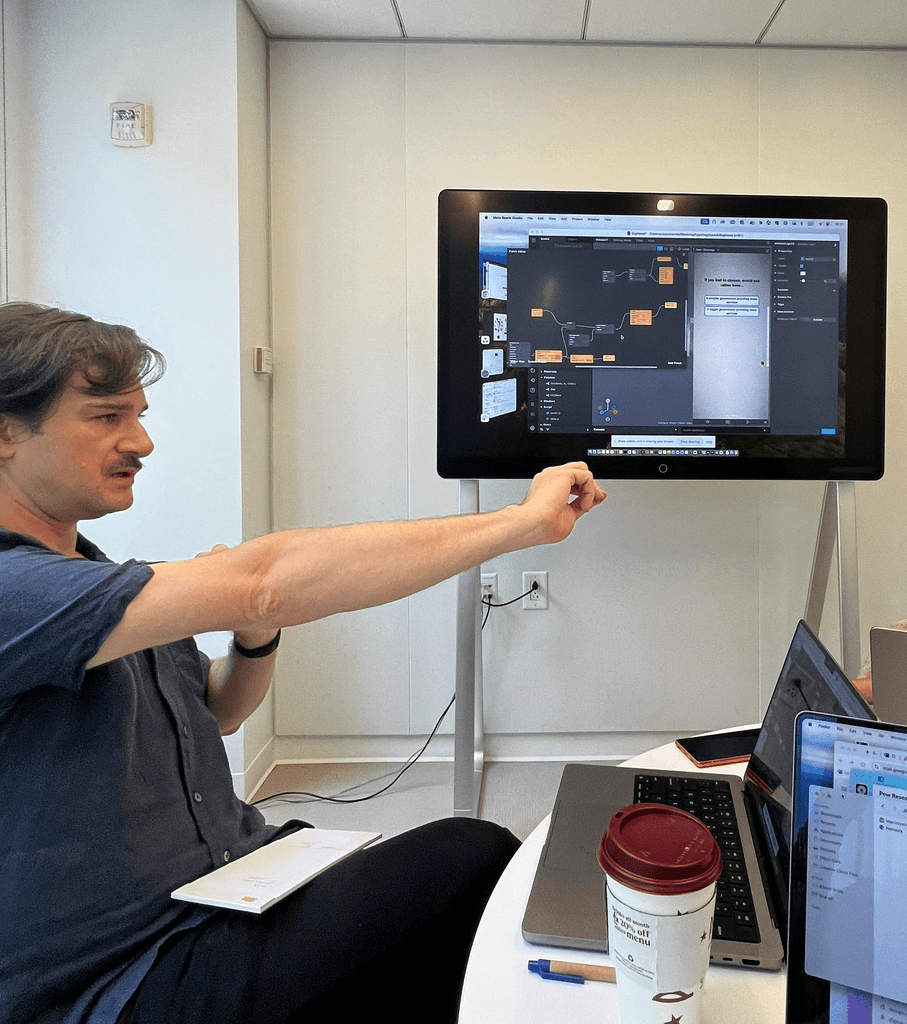
On the technical side, the engineer translated our design concepts into functional AR prototypes. Together, we refined the intro and onboarding experience. I created the motion assets and pitched a case to senior leadership to allow the use of Runway for AI-assisted animation—a policy exception that ultimately allowed us to explore new creative tools responsibly. Although the AI output wasn’t the right fit for the final product, that experiment paved the way for broader acceptance of AI video workflows across Pew.
On the technical side, the engineer translated our design concepts into functional AR prototypes. Together, we refined the intro and onboarding experience. I created the motion assets and pitched a case to senior leadership to allow the use of Runway for AI-assisted animation—a policy exception that ultimately allowed us to explore new creative tools responsibly. Although the AI output wasn’t the right fit for the final product, that experiment paved the way for broader acceptance of AI video workflows across Pew.
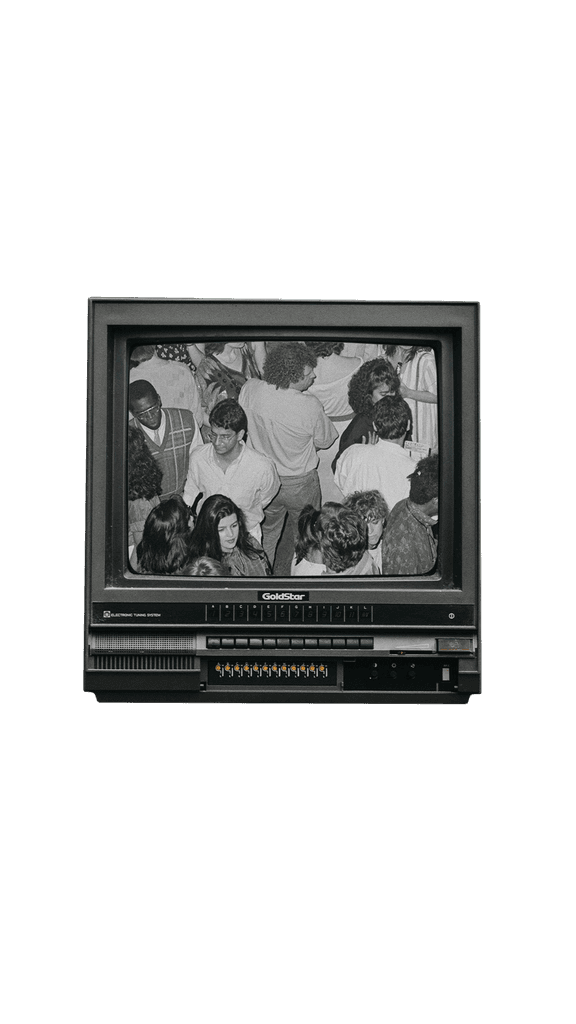
Image 1
1980s
Image 1
1980s
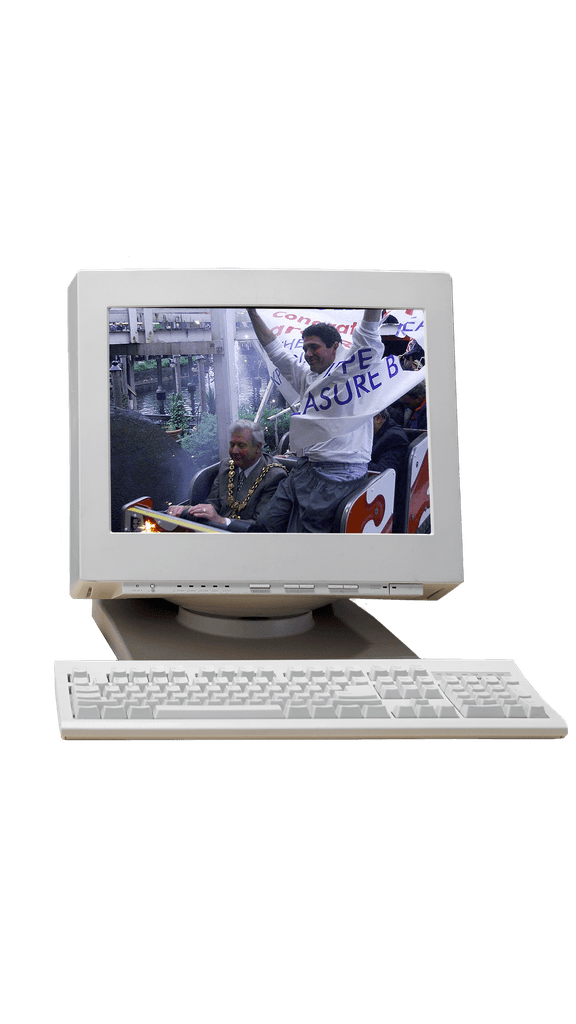
Image 2
1990s
Image 2
1990s

Image 3
2010s
Image 3
2010s
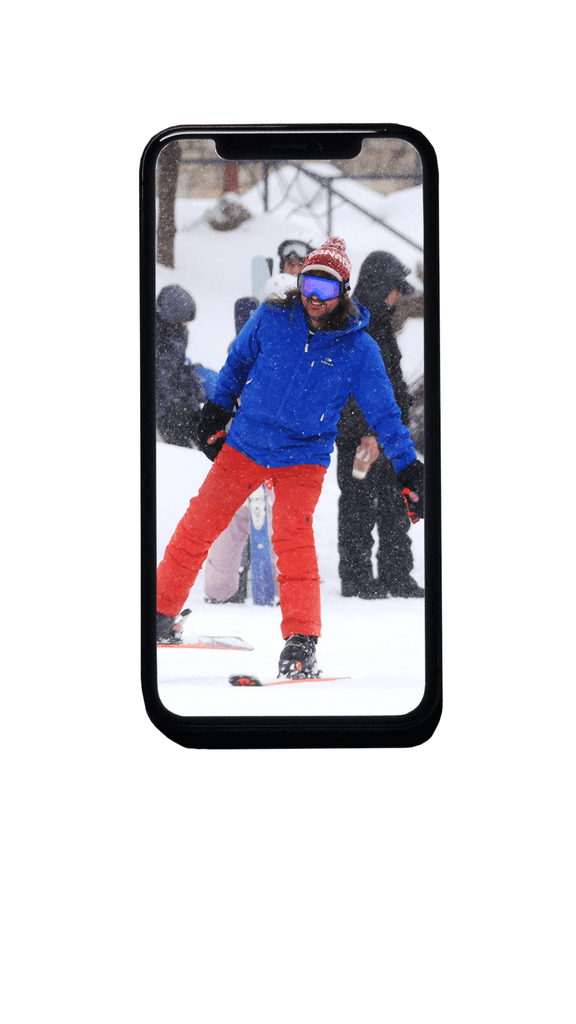
Image 4
2015
Image 4
2015
Image 5
2024
Image 5
2024
We made it to the end.
As we approached finalization, we aligned on the results page interaction—specifically the press-and-hold mechanic needed to generate confetti and reveal each user’s political typology badge. We also collaborated as a group to craft the persona explanations and sharing prompts, ensuring that the moment felt rewarding, informative, and naturally shareable.
Finally, to support launch, I produced the promotional video that introduced the filter across Pew’s channels, helping drive initial discovery and adoption.
As we approached finalization, we aligned on the results page interaction—specifically the press-and-hold mechanic needed to generate confetti and reveal each user’s political typology badge. We also collaborated as a group to craft the persona explanations and sharing prompts, ensuring that the moment felt rewarding, informative, and naturally shareable.
Finally, to support launch, I produced the promotional video that introduced the filter across Pew’s channels, helping drive initial discovery and adoption.